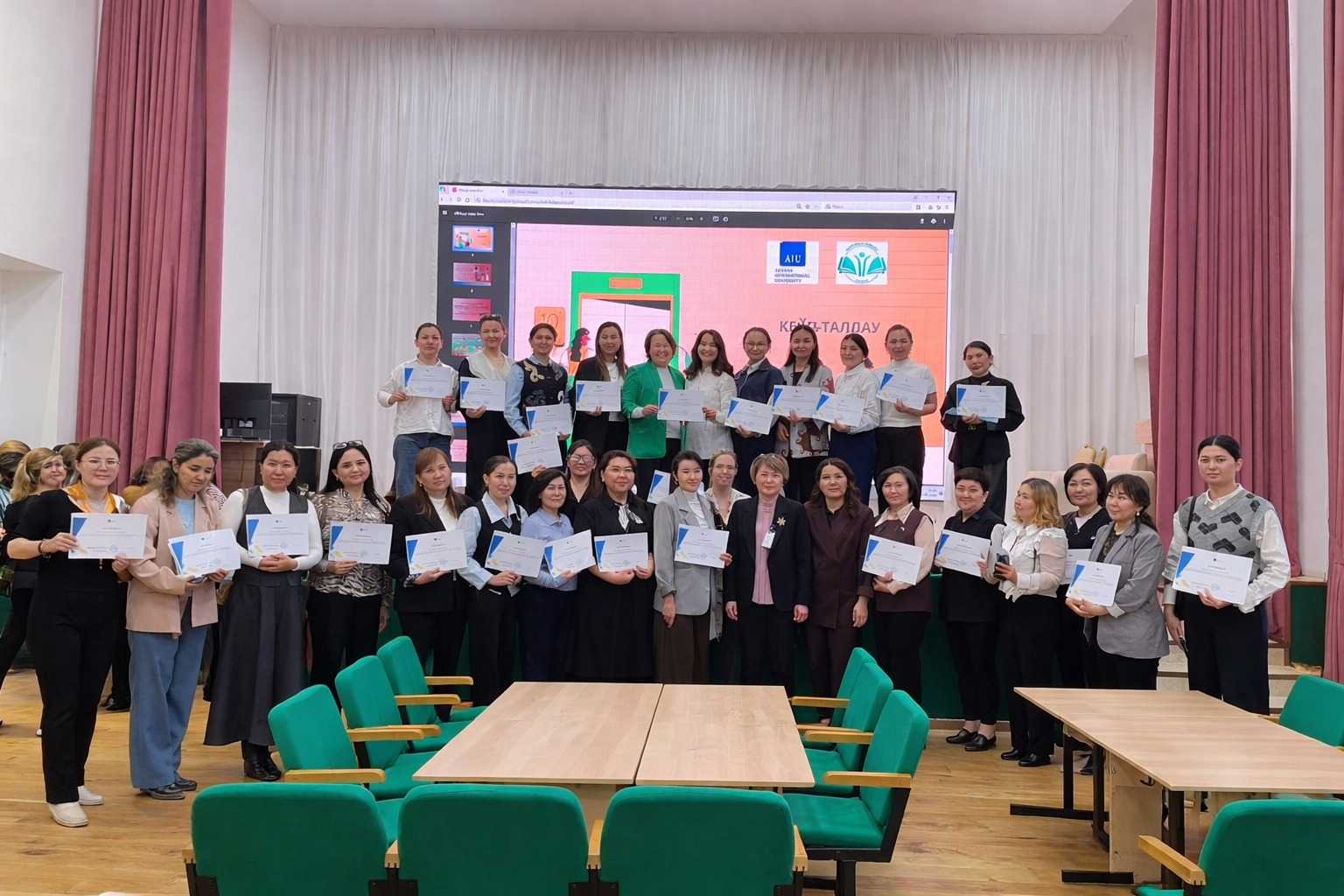
On April 10, 2026, Astana International University, within the framework of an
agreement with the Educational and Methodological Center of Astana, held a
scientific and practical seminar-training titled “Implementation of Inclusive
Practices in the Education System: Theory and Practice.”
The event took place at School-Lyceum No. 59 named after K. Mynbayev and
was aimed at enhancing teachers’ professional competencies in organizing inclusive
education, providing psychological and pedagogical support for students with special
educational needs, and developing an inclusive culture in the educational
environment.
During the seminar, Candidate of Philological Sciences, Associate Professor,
and IASD international expert A.A. Shayakhmetova presented modern approaches
to teaching students with special educational needs. Special attention was given to the
practical aspects of supporting learners, creating a comfortable and safe educational
environment, and ensuring effective interaction among teachers, parents, and
specialists.
Head of the Inclusive Education Department of the University A.M.
Kusainova organized a discussion on the conditions for developing an inclusive
culture, the main barriers in the educational process, and methods of psychological
and pedagogical support through case analysis. The participants examined real
pedagogical situations, exchanged experience, and proposed possible solutions to
current issues in inclusive education.
As part of the event, participants actively discussed modern challenges, shared
practical experience, and received professional recommendations from specialists of
Astana International University.
At the end of the seminar, Director of the Center of Excellence of Astana
International University A.I. Chokusheva presented letters of appreciation to the
leadership of the Educational and Methodological Center of Astana and School-
Lyceum No. 59 named after K. Mynbayev, as well as certificates to all seminar
participants.
The seminar became an important platform for exchanging experience,
developing professional dialogue, and strengthening cooperation in the field of
inclusive education.