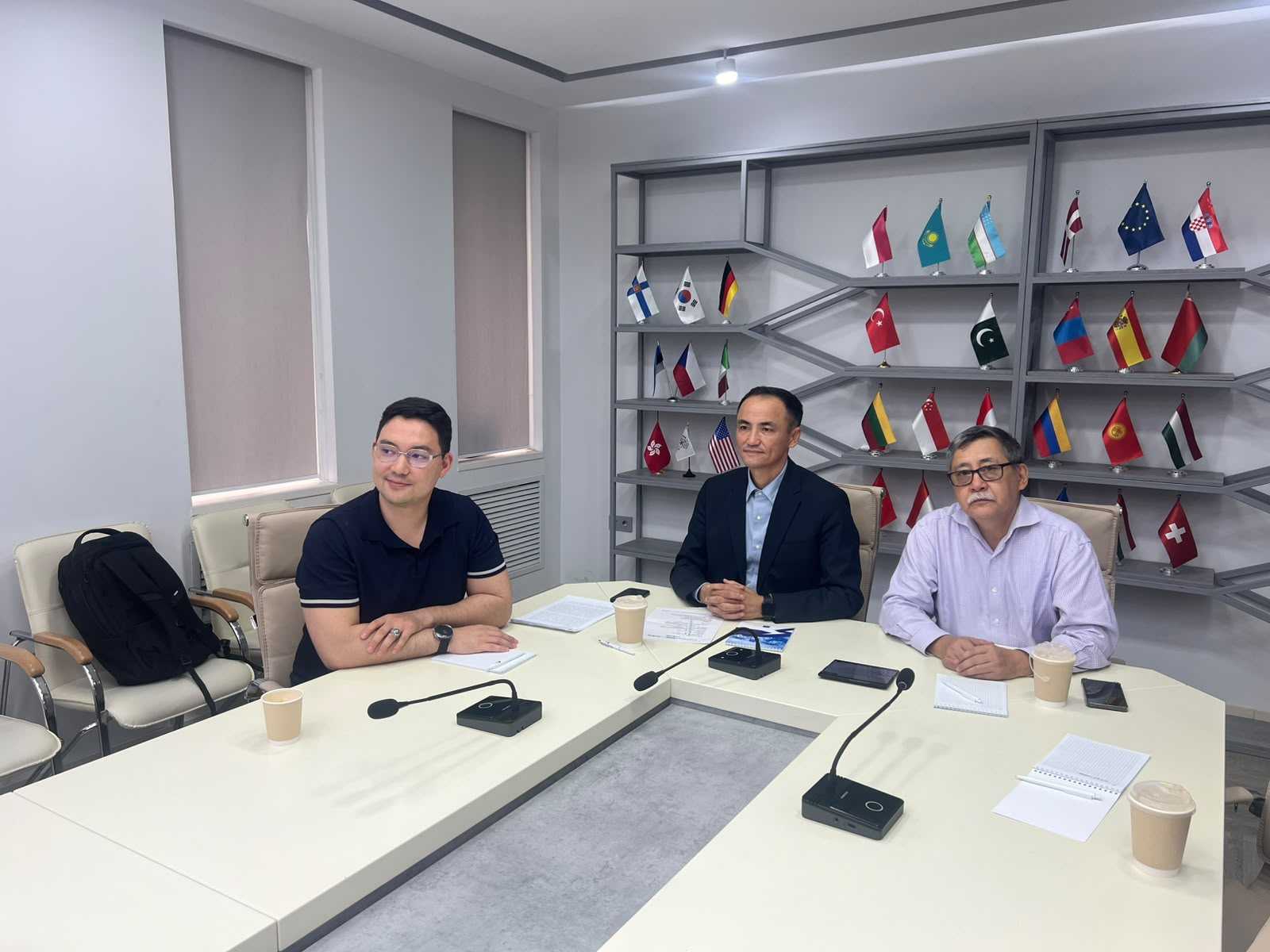
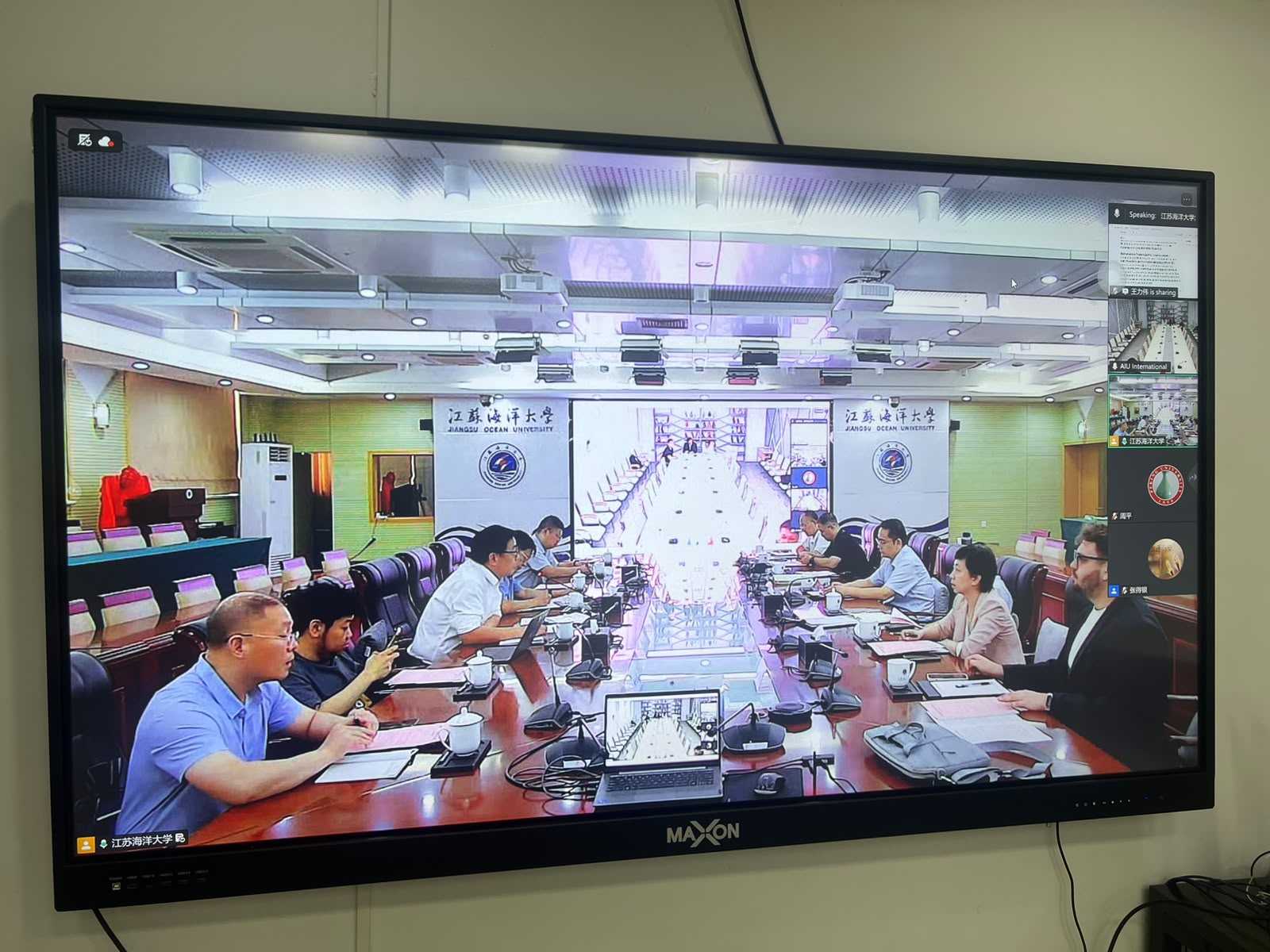
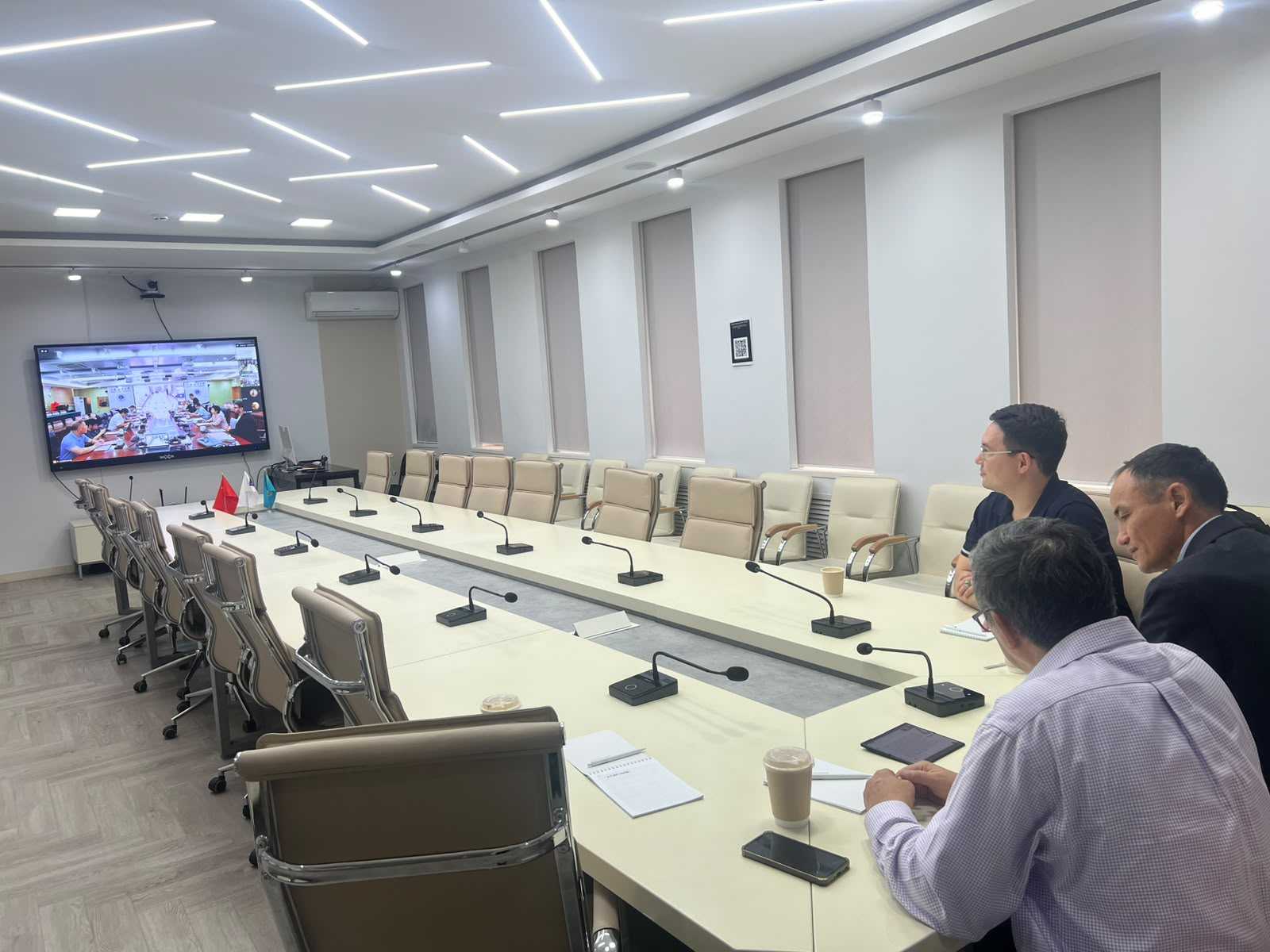
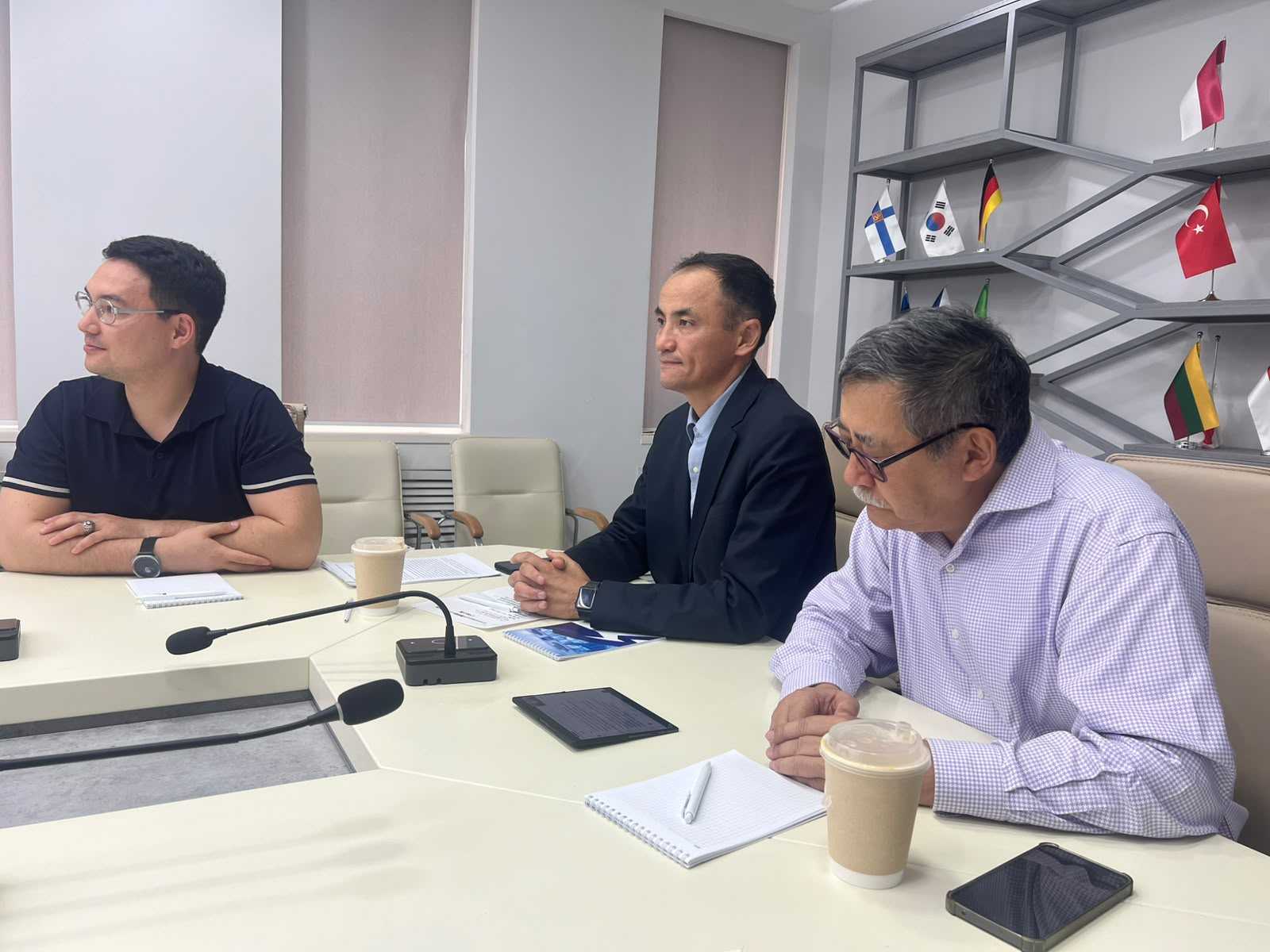
On September 22, 2026, a delegation from Astana
International University (AIU) participated in an extended meeting of the
Academic Council of the Research Institute for the New Asia–Europe Land–Sea
Transport Corridor (NLSTC Research Institute). The event was held at Astana
International University and Jiangsu Ocean University.
The delegation included AIU Vice-Rector and Deputy Chair of
the Academic Council of the NLSTC Research Institute Kairat Abdrakhmanov;
Professor Meiram Kazhyken, Head of the branch’s research projects; Nurali
Irsaliyev, Executive Director of the NLSTC Research Institute at AIU; and Aslan
Anetbayev, Chief Research Fellow at the branch.
During the first stage of the meeting, Vice-Rector Kairat
Abdrakhmanov delivered a welcoming address to the council members. The agenda
included a review of the institute’s research activities in 2025 and a
discussion of its plans for 2026. Sun Jun, Executive Director of the institute,
reported that 26 research projects had been approved for implementation during
the current year, including four priority projects and 22 general projects. The
key research areas included corridor development, cross-border supply chains,
the China–Kyrgyzstan–Uzbekistan route, and energy cooperation in Central Asia.
Following the project evaluations, 11 projects received the highest rating,
while several final reports attracted the attention and gained the approval of
provincial and municipal authorities.
Dr. Zhang Deyin then presented a plan for selecting
research topics for 2026. The new program includes 30 thematic areas divided
into three key categories: “hard connectivity” (modernization of infrastructure
and logistics), “soft connectivity” (institutional openness), and “industrial
and cultural connectivity” (trade and economic synergy and people-to-people
exchanges). Against the backdrop of progress in the construction of the
China–Kyrgyzstan–Uzbekistan railway, the main focus of research in 2026 will be
the transformation of the corridor from a conventional transit route into a
fully-fledged economic hub. At the end of the meeting, Professor Shi Zhiqin,
Chair of the Academic Council and Director of the Institute for Strategic
Studies at Tsinghua University, summarized the outcomes of the session.